
-
About Us
Why Choose Us?The company possesses advanced capabilities in mold design, injection molding, and automated assembly, supported by a professional quality inspection team to ensure product reliability. A dedicated design team continuously drives product innovation, providing customers with high-quality spray solutions.
 Coming From China, Marketing To The World.
 -
Products
-
News
 English
 Français
 русский
 Español
Misting Spray Bottle Guide: How a Fine Mist Sprayer Works
Content
- 1 Quick Answer: What Makes a Misting Spray Bottle Work Well
- 2 How a Fine Mist Sprayer Pump Produces an Even Spray
- 3 Specifications to Check Before Choosing a Sprayer
- 4 Where Misting Spray Bottles Are Used
- 5 Fine Mist Sprayer vs. Trigger Sprayer vs. Regular Sprayer
- 6 Quality Checks Before Bulk Ordering a Fine Mist Sprayer
- 7 Sourcing a Reliable Fine Mist Sprayer Supplier
Quick Answer: What Makes a Misting Spray Bottle Work Well
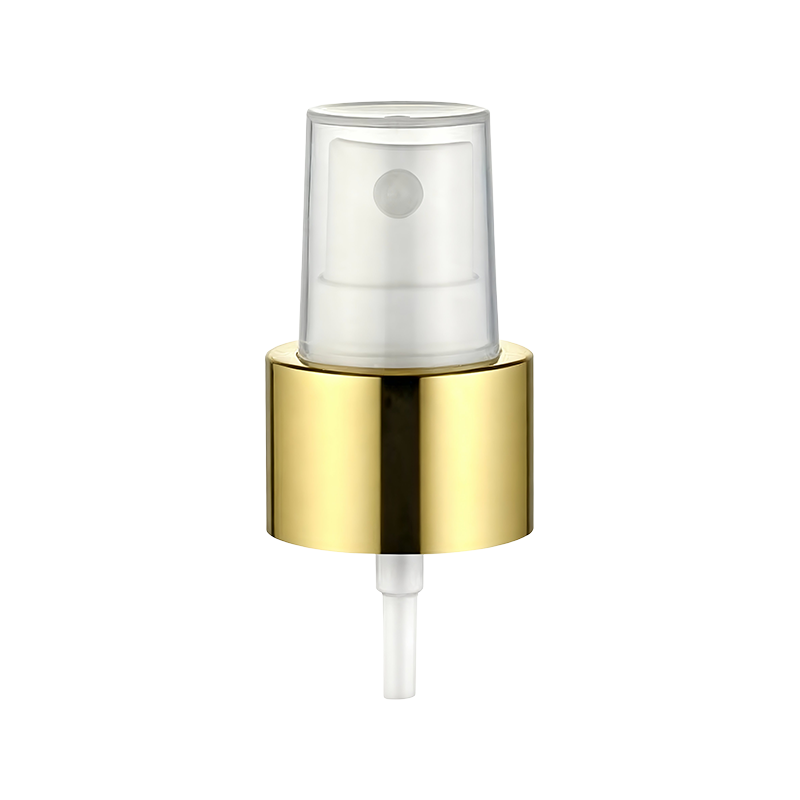
A misting spray bottle performs well when its pump, commonly called a Fine Mist Sprayer, produces a consistent, evenly dispersed spray rather than large droplets or an uneven stream. The key factors behind this are the size of the nozzle orifice, the internal actuator design, and the dip tube length matched to the bottle's height. Good Fine Mist Sprayer pumps typically produce droplets in the 40 to 150 micron range and dispense between 0.10 ml and 0.20 ml per full stroke, fine enough to cover skin, hair, or a surface evenly without oversaturating one spot. The sections below cover how these pumps work internally, the specifications that matter when choosing one, and how a fine mist sprayer compares to other spray mechanisms for different applications.
How a Fine Mist Sprayer Pump Produces an Even Spray
Pressing the actuator down drives a small internal piston, which forces liquid through a narrow swirl chamber before it exits the nozzle orifice. That swirl chamber is what breaks the liquid stream into fine droplets rather than letting it exit as a solid jet, and its precision is what separates a reliable Fine Mist Sprayer from one that clogs or sprays unevenly after repeated use.
The Role of the Dip Tube
The dip tube extends from the pump down into the liquid inside the bottle, and its length needs to match the bottle's internal height closely. A tube cut too short leaves product stranded at the bottom of the bottle, while a tube that is too long can bend or kink inside a narrow neck, restricting flow and causing weak or sputtering sprays.
Specifications to Check Before Choosing a Sprayer
| Specification | Why It Matters |
|---|---|
| Neck finish size (e.g. 18/410, 20/410, 24/410) | Must match the bottle's thread exactly to create a sealed, leak-free fit |
| Output per stroke | Determines how much product is dispensed with each press, affecting product usage rate |
| Droplet size range | Finer droplets spread more evenly over skin, hair, or a surface without pooling |
| Dip tube length | Needs to reach near the bottle bottom to avoid leaving unusable product behind |
| Chemical compatibility of internal seals | Prevents the pump from degrading when used with alcohol-based or oil-based formulas |
Where Misting Spray Bottles Are Used
- Skincare toners and facial mists, where an even, fine spray helps the product absorb without leaving heavy droplets on the skin
- Hair care products such as leave-in treatments and setting sprays, where consistent coverage matters more than a strong jet
- Fragrance and body mist packaging, where droplet fineness directly affects how a scent is perceived on application
- Household cleaning sprays, where a finer mist can cover glass, countertops, or fabric more evenly than a coarse stream
Across all of these categories, a well-made Fine Mist Sprayer is what turns a simple bottle of liquid into a controllable, pleasant-to-use product rather than something that dribbles or sprays inconsistently.
Fine Mist Sprayer vs. Trigger Sprayer vs. Regular Sprayer
Not every spray bottle needs the same type of pump. The mechanism should match how the product is actually used.
| Sprayer Type | Best Suited For |
|---|---|
| Fine mist sprayer | Skincare mists, fragrances, hair care, precise light coverage |
| Trigger sprayer | Household cleaning products needing higher output volume per squeeze |
| Regular mist sprayer | General-purpose bottles where droplet fineness is less critical |
Quality Checks Before Bulk Ordering a Fine Mist Sprayer
- Request a dosing consistency test across a sample batch, since output per stroke should stay within a tight tolerance, typically within ±0.02 ml, to avoid uneven product usage across units.
- Check for an anti-clog nozzle design, particularly for formulas containing oils or particulates that can build up in the swirl chamber over repeated use.
- Confirm the pump includes an anti-backflow or check valve, which keeps product from siphoning back into the bottle and helps prevent microbial contamination of the remaining liquid.
- Test the actuator and closure fit under transport conditions to rule out leaking during shipping, especially for bottles traveling internationally in mixed pallets.
Sourcing a Reliable Fine Mist Sprayer Supplier
GreenYard Tools Co., Ltd. has specialized in spray product manufacturing for 16 years, producing Fine Mist Sprayer pumps alongside lotion pumps, treatment pumps, foam pumps, and caps for cosmetic and household packaging, with in-house mold design and automated assembly supporting a daily production capacity of up to one million units. The company holds ISO 9001 quality management certification, along with GRS and SMETA certifications covering recycled materials and social responsibility standards.
For brands sourcing a misting spray bottle at scale, requesting documented droplet size data and dosing tolerance for the specific Fine Mist Sprayer model — rather than relying on a general product description — is the most reliable way to confirm the pump will perform consistently across a full production run.
-
Spray Bottles Explained: Choosing the Right Fine Mist Sprayer
What Makes a Good Spray Bottle A good spray bottle depends almost entirely on the quality of its pu...
-
Trigger Sprayer Guide: How It Works, Types & Buying Tips
What Is a Trigger Sprayer A trigger sprayer is a mechanical pump closure mounted on a bottle neck t...
-
What Is a Fine Mist Sprayer?
A fine mist sprayer is a cosmetic packaging component designed to atomize liquid formulas into ultr...
-
What Is Perfume Spray? How Atomizers Work, Mist Types and Packaging Basics
Press the actuator on a fragrance bottle once and a metered dose of liquid, usually between 0.05 an...
Copyright © GreenYard Tools Co.,ltd. All Rights Reserved.
Personal Care Packaging Manufacturer Custom Perfume Sprayers Factory