
-
About Us
Why Choose Us?The company possesses advanced capabilities in mold design, injection molding, and automated assembly, supported by a professional quality inspection team to ensure product reliability. A dedicated design team continuously drives product innovation, providing customers with high-quality spray solutions.
 Coming From China, Marketing To The World.
 -
Products
-
News
 English
 Français
 русский
 Español
Can You Recycle Deodorant Containers? A Complete Guide to Proper Disposal
Content
- 1 Can You Recycle Deodorant Containers? The Short Answer
- 2 Which Deodorant Container Types Are Recyclable?
- 3 Step-by-Step: How to Prepare a Deodorant Container for Recycling
- 4 Why Deodorant Containers Get Rejected at Recycling Facilities
- 5 Understanding the Resin Codes on Deodorant Containers
- 6 Refillable Containers and PCR Plastic: Going Beyond Recycling
- 7 For Brands: Designing Deodorant Packaging for End-of-Life Recyclability
Can You Recycle Deodorant Containers? The Short Answer
You just finished your last stick of deodorant. You are holding an empty plastic container with a small platform sticking out of the bottom. The question is simple: can this go into the curbside recycling bin?
Yes — most deodorant containers are recyclable, but only after you empty, disassemble, and rinse them. The container itself is rarely the problem. The real issues are leftover product, mixed materials, and small parts that recycling facilities cannot process.
Here is what determines whether your container actually gets recycled: the resin code, the design of the container, and the rules of your local recycling program.
Which Deodorant Container Types Are Recyclable?
Deodorant packaging comes in several forms, and not all of them are treated the same way. Use this comparison to understand what your local facility likely accepts:
| Container type | Main material | Recyclable? | Preparation needed |
|---|---|---|---|
| Plastic stick | PP (#5) or HDPE (#2) | Yes | Remove platform, rinse, dry |
| Roll-on bottle | PET (#1) or PP (#5) | Yes with disassembly | Extract ball, rinse, recycle bottle |
| Aerosol can | Aluminum or steel | Yes when empty | Do not puncture; remove cap and nozzle |
| Glass jar | Glass | Yes | Rinse and remove lid |
| Paperboard tube | Recycled paper | Yes | Flatten, remove any plastic liner |
| Multi-layer plastic | Mixed resins | Often no | Check local rules; separate if possible |
The last row is the most important one. If a deodorant stick combines polypropylene and polyethylene in one piece, many municipal sorting lines will reject the entire item because the two resins cannot be separated efficiently.
Step-by-Step: How to Prepare a Deodorant Container for Recycling
Preparation takes about 30 seconds and makes the difference between a container that is recycled and one that is landfilled.
- Use the product completely. Apply the deodorant until no remaining product coats the sides or the platform.
- Take the container apart. For a stick, push or pry the platform out of the tube. For a roll-on, remove the ball and ball housing. For an aerosol, leave the can intact but remove the plastic cap and nozzle.
- Wash with warm soapy water and a soft cloth. Deodorant contains waxes, oils, and aluminum salts that cling to plastic. A thin film affects the reprocessing quality.
- Dry completely. Wet items can contaminate dry paper and cardboard in the same recycling stream.
- Check the resin identification mark. Look for the triangle stamp on the bottom. It tells you which plastic your container is made from.
- Sort the components. Place plastic parts in the plastic bin, metal springs or clips in the metal bin, and glass balls in the glass bin.
One important exception: never puncture an aerosol deodorant can. Pressurized cans must stay intact through the recycling process. The metal is recyclable, but only if it reaches the facility safely.
Why Deodorant Containers Get Rejected at Recycling Facilities
Municipal recycling facilities reject a substantial share of the personal care items they receive. Deodorant containers are among the most common offenders for three specific reasons:
- Residual product. Deodorant sticks are wax-based. Even a thin layer can coat plastic during processing, which reduces the market value of recyclable resins and can contaminate an entire bale.
- Mixed-material construction. A stick container often combines an outer tube, an inner platform, and a rotating base — each made from a different resin. If the consumer does not separate them, the facility cannot process the item.
- Small plastic parts. The platform and twist base are frequently smaller than two inches. These parts fall through sorting screens and end up in the landfill even when the rest of the container is correctly recycled.
Understanding these rejection points helps both consumers and brand owners. For consumers, better preparation means fewer items rejected. For brands, designing with mono-material structures and removable components increases the chance that the package will actually be recycled.
Understanding the Resin Codes on Deodorant Containers
The resin identification code stamped on the bottom of a plastic container is the fastest way to determine recyclability. For deodorant packaging, you will most often see three codes:
#5 Polypropylene (PP)
Most plastic deodorant sticks are made from PP. It is strong, chemically resistant, and widely accepted by curbside programs. PP retains its properties after reprocessing and is commonly used in laundry detergent bottles, yogurt cups, and food containers.
#2 High-Density Polyethylene (HDPE)
Some stick containers use HDPE for a slightly softer, more flexible feel. HDPE is also a preferred resin for recyclers because it separates easily from other plastics and has a well-established end market.
#1 Polyethylene Terephthalate (PET)
Roll-on deodorant bottles typically use PET for the outer bottle. PET is the same material found in water and soda bottles. It is recyclable, but the ball and ball housing must be removed before processing.
What about #6 (polystyrene) or #7 (other)? These codes appear in some specialty deodorant containers, but they are far less likely to be accepted by municipal recycling programs. If your container carries a #6 or #7 code, check with your local facility before placing it in the bin.
Refillable Containers and PCR Plastic: Going Beyond Recycling
Recycling is an important end-of-life strategy, but the real sustainability gains come from reducing the amount of new plastic entering the system. That is why refillable deodorant containers and post-consumer recycled (PCR) resin have become key decisions for brand owners.
Refillable deodorant containers keep the outer shell in active use for years. A single refillable stick container can replace 50 or more standard stick containers over its lifetime. The user only discards the smaller refill, which is far less material overall.
PCR plastic is another approach. Containers made from PCR resin divert existing plastic waste from landfills and give it a second life. In deodorant stick packaging, PP formulations with 50% PCR content are commercially available, and some suppliers offer up to 90% PCR depending on color and application requirements.
Paperboard deodorant tubes are also growing in popularity. Made from renewable fiber, these tubes can be flattened and recycled in the paper stream. However, many paperboard tubes include a thin plastic liner or wax coating that must be separated. Always read the packaging instructions before assuming a paperboard deodorant tube is curbside recyclable in your area.
For Brands: Designing Deodorant Packaging for End-of-Life Recyclability
When brands and packaging engineers evaluate deodorant stick containers, the selection criteria have shifted. End-of-life recyclability is now a defining requirement in the supplier evaluation process. Here is what matters most:
Mono-material construction. A deodorant stick container made entirely from PP, including the platform and base, can be recycled without separation. This single change dramatically improves the container's acceptance rate at recycling facilities.
Removable internal platform. If the platform is designed for easy extraction, consumers and sorters can separate the parts quickly. A similar principle applies in other personal care packaging categories — especially in airless bottles with replaceable inner cartridges, where refillability and recyclability go hand in hand.
Stick containers with mono-material structure. GreenYard offers a plastic deodorant stick bottle engineered for easy recycling and consistent dispensing performance.
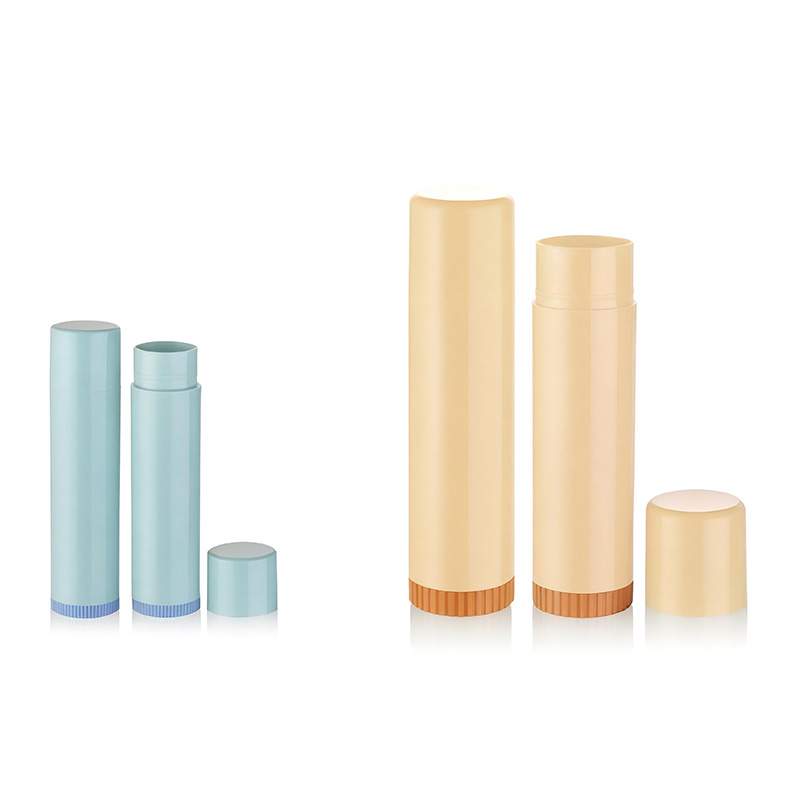 Mini Plastic Deodorant Stick Bottle for Lip Balm and BlushThis compact container holds 4.5g or 15g, making it suitable for small samples or regular-sized lip balm and blush products. Its mono-material PP construction supports easy recycling.View Product →
Oval designs in the 50–75 g range. For premium applications that need a comfortable grip and a clean visual profile, GreenYard's oval deodorant stick container supports mono-material PP construction and simple disassembly.
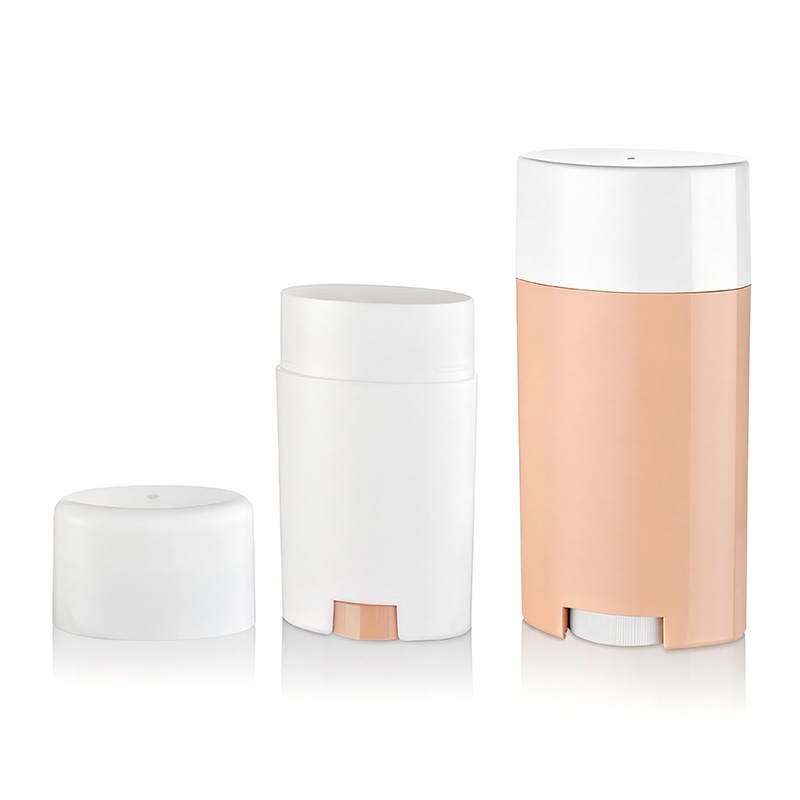 Oval Plastic Deodorant Stick Container in 50g and 75gDesigned for deodorants and sunscreens, this flat oval bottle maximizes application area and dispenses smoothly. Its mono-material PP build aids recyclability and simple disassembly.View Product →
If you are evaluating a new deodorant container or want to improve the recyclability of an existing pack, the GreenYard team can help. Contact GreenYard to discuss your packaging requirements.
-
Airless Bottles Uncovered: How to Protect Your Skincare and Perfect Every Pump
If you have ever opened a pump bottle of serum and found the last quarter of the product impossible ...
-
Deodorant Containers Eco Friendly: Sustainable Bottle Guide
Deodorant Containers Eco Friendly: The Direct Answer The most eco-friendly deodorant containers are...
-
Amber Plastic Bottles: Lightweight, Protective, Customizable Packaging for Cosmetics
You have spent months stabilizing a vitamin C serum, only to watch a pallet of amber glass bottles ...
-
Provide You With The Latest Enterprise And Industry News.
We are more than just a packaging manufacturer; we are a trusted partner in your supply chain. With...
Copyright © GreenYard Tools Co.,ltd. All Rights Reserved.
Personal Care Packaging Manufacturer Custom Perfume Sprayers Factory