
-
About Us
Why Choose Us?The company possesses advanced capabilities in mold design, injection molding, and automated assembly, supported by a professional quality inspection team to ensure product reliability. A dedicated design team continuously drives product innovation, providing customers with high-quality spray solutions.
 Coming From China, Marketing To The World.
 -
Products
-
News
 English
 Français
 русский
 Español
Amber Plastic Bottles: Lightweight, Protective, Customizable Packaging for Cosmetics
Content
You have spent months stabilizing a vitamin C serum, only to watch a pallet of amber glass bottles arrive with cracked necks and chipped shoulders. That is the moment many beauty and personal care brands start asking whether an amber plastic bottle can deliver the same light protection without the fragility. The answer is yes, provided the material, colorant system, and closure engineering are selected for your specific formula. And because the choice affects filling efficiency, shipping cost, and consumer experience, it deserves the same attention you give to the formulation itself.
Why Amber Plastic Bottles Are Gaining Ground in Packaging
Amber was once automatically paired with glass, especially for serums, essential oils, and medicinal tinctures. The reason is simple: amber glass filters UV light and looks premium on a shelf. But modern plastics have caught up in both appearance and function. Brands now choose amber plastic bottles for three practical reasons.
First, weight reduction is immediate and measurable. A 50 ml PET bottle weighs about 30 grams, while a similar 50 ml glass bottle weighs around 120 grams. That difference translates into lower freight costs and easier handling for e-commerce and retail. Second, plastic eliminates the risk of glass fragments entering a filling line, which is a critical safety point for cosmetics and personal care products. Third, a well-formulated amber masterbatch can block more than 90% of UV-A and UV-B radiation, making it suitable for light-sensitive ingredients when the wall thickness is appropriate.
It would be an overstatement to say every amber plastic bottle offers the same protection as amber glass. The colorant loading, bottle wall distribution, and even the mold design affect the final UV transmission. But with the right supplier, plastic can meet the performance target while adding durability.
Amber Plastic vs. Amber Glass: A Practical Comparison
The table below summarizes the differences that matter to procurement and production teams. Use it as a starting point, not a substitute for real sample testing.
| Property | Amber Glass | Amber Plastic |
|---|---|---|
| Weight per 50 ml | About 120 g | About 25–35 g |
| Breakage on drop | High | Very low |
| UV barrier consistency | Inherent in glass | Depends on masterbatch |
| Recyclability | Yes | PET and PP recyclable |
At the end, the total cost of ownership often favors plastic, especially when you consider breakage, packaging weight, and freight. But if your brand identity heavily depends on the feel of glass, hybrid options such as plastic bottles with a glass-like coating are also emerging. Your decision should be based on the product line, price point, and distribution channel.
Choosing the Right Resin for Your Amber Bottle
The resin you choose changes not only the bottle’s weight and barrier, but also its ability to hold an amber color accurately.
- PET is the best all-rounder for cosmetic bottles, offering good clarity, strong compatibility with sprayers, and full recyclability.
- PETG is tougher than standard PET, with better impact resistance for thick-walled or heavier containers.
- PP is lighter and suitable for hot-fill products, though its surface clarity is lower than PET.
- HDPE gives excellent moisture barrier and lower cost, but accepts less transparent amber tones.
For most skincare and personal-care applications, PET is the default choice because it accepts vacuum metallization, labels, and plated closures without issue. At GreenYard, we produce both flat-shoulder and round-shoulder PET bottles that can be molded in amber masterbatches matching Pantone references. Our flat-shoulder PET bottle is a practical starting point for a 50 ml to 250 ml lotion or cleansing liquid. It has a wide neck, stable stacking, and no shoulder that traps product, which is important when you are dispensing thick emulsions.
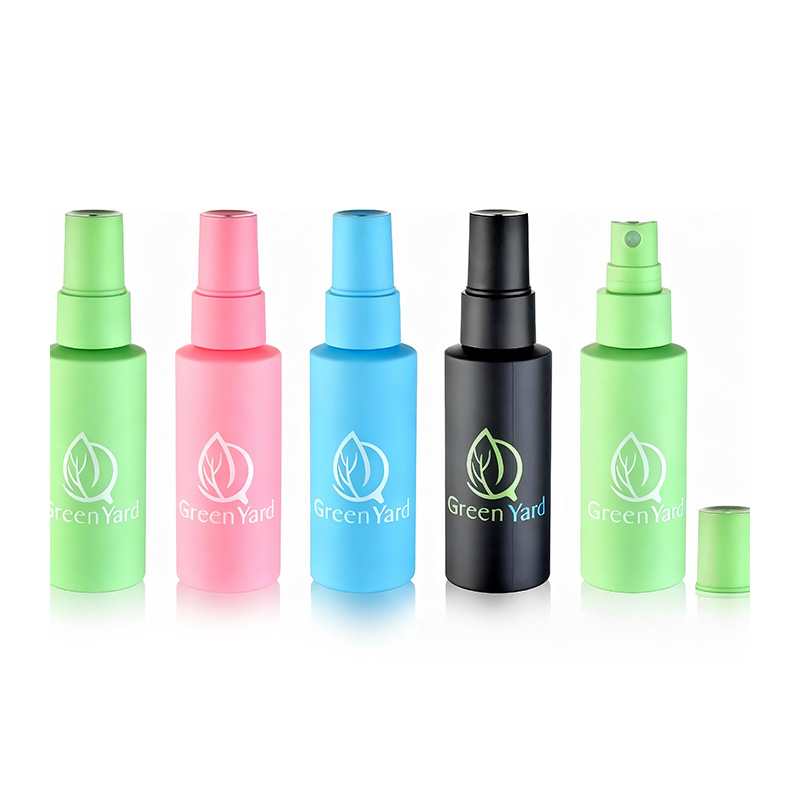 Plastic Flat Shoulder PET Bottle Manufacturer, Custom Company - GreenYard Tools As China Plastic Flat Shoulder PET Bottle manufacturer and OEM company, GreenYard Tools Co.,ltd specializes in custom Plastic Flat Should...View Product →
If you are unsure whether PET or PP is suitable for your formula, ask for a wall thickness and UV transmission report. A professional manufacturer will provide the data and also recommend the correct bottle capacity, neck finish, and closure.
Closure Compatibility and Dispensing Performance
An amber bottle is only as good as its closure. If the liquid is water-like, a fine mist sprayer or a screw-on cap with an inner seal prevents leaks. If the liquid is thick, a lotion pump with a spring and ball valve gives a smooth dose. The neck finish must match the closure standard: 18/410, 20/410, 24/410, and 28/410 are the most common in cosmetic packaging.
- For thin toners and mists: 18/410 neck with a fine mist sprayer or a small orifice flip cap.
- For lotions and liquid soaps: 24/410 neck with a 1.8 cc or 2 cc lotion pump.
- For serums and treatment creams: 18/410 or 20/410 neck with an external spring treatment pump.
- For thick creams and balms: 28/410 or 30/410 neck with a screw-down lotion pump or a wide-mouth jar with a spatula.
Compatibility does not stop at the thread. The gasket material must be compatible with your product’s solvents, and the pump spring must be protected from corrosive formulas. When you test closures with an amber PET bottle, fill the bottle with your actual product and perform a leak test at different temperatures and orientations. Ask your supplier for a pressure test or a centrifugal test if you ship internationally.
If you are not sure which combination will work, send us your viscosity, fill volume, and target dosing amount and our engineers will match a closure from our portfolio.
Quality Control, Customization, and Supply Chain Checks
Color variation is the most common complaint in amber plastic packaging. A slight change in masterbatch concentration can shift the bottle from a deep cognac to a pale yellow. To avoid this, ask your supplier for their acceptable delta-E range and batch-to-batch color stability data. GreenYard, for example, keeps amber color within ΔE ≤ 1.5 from the approved sample during mass production.
Quality control also means testing bottle strength, neck dimensions, and liner sealing. Automated vision systems catch flash, short shots, and visible color streaks before your order is packaged. In our factory, key processes are automated at 90%, and standard batch pass rates stay above 99.5%. We supply bottles, caps, and pumps as a complete system, so the final leak test is performed on the assembled package rather than on each component separately.
Another important point is minimum order quantity (MOQ). Some suppliers impose a high MOQ only because they cannot control color changes across longer runs. A flexible manufacturer can work with you on trial orders and scale up gradually. Our round-shoulder PET bottle gives the same amber performance in a rounder profile, so customers see one consistent line while you benefit from shared inventory of caps and pumps. We can also coordinate decoration, from silk printing to shrink sleeves, at the same location to reduce logistics complexity.
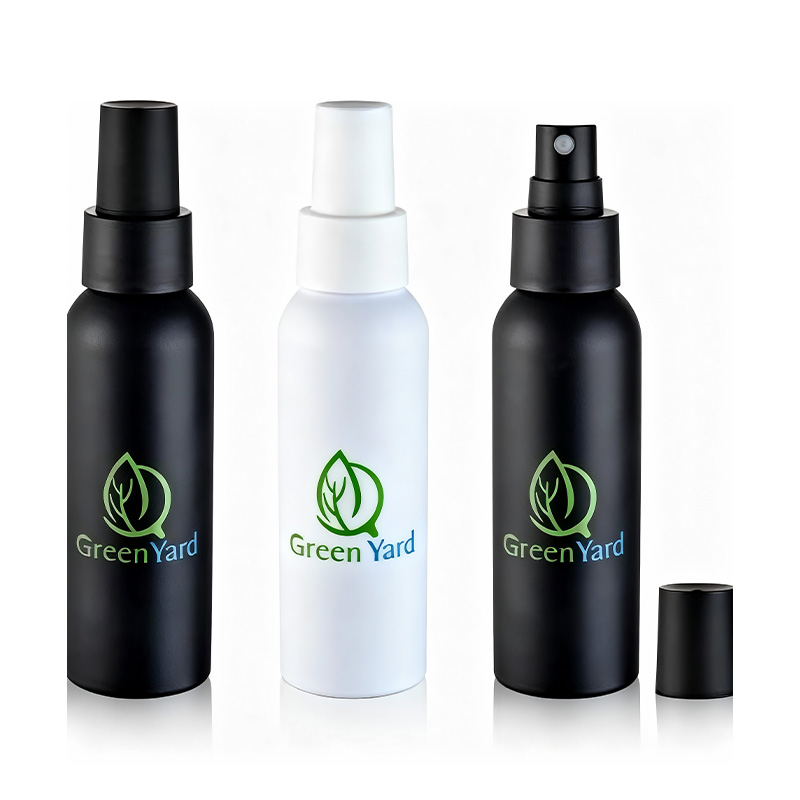 Plastic Round Shoulder PET Bottle Manufacturer, Custom Company - GreenYard ToolsAs China Plastic Round Shoulder PET Bottle manufacturer and OEM company, GreenYard Tools Co.,ltd specializes in custom Plastic Round Shou...View Product →
Amber plastic bottles have moved beyond being a “glass alternative” into a category of their own. They reduce breakage, lower freight costs, and can be engineered to meet specific light-blocking requirements. The key is to validate the bottle with your real product, understand the UV data, and choose a supplier that controls both the bottle and the closure. If you are ready to test samples and review technical specifications, the GreenYard team is prepared to support your project from first drawing to delivered pallets.
-
Roll On Bottles: Types, Refill Guide, and Packaging Buying Tips for Your Brand
The first sample rolled smoothly, the second clicked, and the third leaked after ten presses. Three...
-
Best Skincare Packaging: How to Choose Bottles, Pumps & Jars That Last
The last time a skincare brand sent us a bottle to test, the cap looked premium but the pump leaked...
-
Crimp Pumps Demystified: Choosing the Right Type and Material for Every Cosmetic Formula
Walk into any cosmetic filling facility and you will find crimp pumps on everything from a delicate ...
-
Airless Bottles Uncovered: How to Protect Your Skincare and Perfect Every Pump
If you have ever opened a pump bottle of serum and found the last quarter of the product impossible ...
Copyright © GreenYard Tools Co.,ltd. All Rights Reserved.
Personal Care Packaging Manufacturer Custom Perfume Sprayers Factory